Blood sample transport plays a critical role in modern healthcare. From routine diagnostics to life-saving treatments, blood samples move between collection points and laboratories every single day. These samples are extremely sensitive, and even small mistakes during handling or transit can lead to inaccurate results or patient harm.
Improper blood sample transport can affect temperature stability, cause contamination, or result in hemolysis. When this happens, test results may become unreliable, forcing patients to repeat tests and delaying medical decisions. That is why strict regulations exist and why every party involved must take them seriously.
In this article, you will learn about the regulatory requirements that govern blood sample transport, including international standards, packaging rules, labeling obligations, temperature control, documentation, and staff training.
What Blood Sample Transport Means and Why It Requires Regulation?

Transporting blood samples is more than just moving them from a clinic or hospital to a lab for testing. It is about making sure each sample gets there safely and stays in the right condition. Every part of the process, from carefully handling and packaging to keeping track of the sample and delivering it on time. And it is important to ensure the results remain accurate and reliable.
The responsibility doesn’t fall on just one person or team. Laboratories, healthcare providers, and courier staff all play a role, and if even one part of the process slips up, the whole chain can be affected.
Strict rules are in place because blood samples can carry infectious agents and are easily affected by temperature changes, movement, or contamination. Following regulations protects patients, keeps healthcare workers safe, and ensures that lab results are accurate, which is vital for public health.
Types of Blood Samples and How Regulations Differ for Each?
Not every blood sample is the same, and each type needs to be treated differently. Whole blood, plasma, serum, and dried blood spots all have their own needs when it comes to handling and transport.
Whole blood is very sensitive and can be easily affected by changes in temperature or rough movement. Plasma and serum often need to be spun in a centrifuge and kept cool to stay stable. Dried blood spots are more resilient but still need protection from moisture and contamination.
Because of these variations, each type of blood sample must be transported according to the proper protocols. Careful handling is always necessary because neglecting these particular requirements can result in sample deterioration or erroneous test results.
International Regulatory Standards Governing Blood Sample Transport
Around the world, healthcare depends on international guidelines to keep blood sample transport consistent and safe. The World Health Organization offers practical advice on how to pack, handle, and move biological materials so that everyone involved stays protected and exposure risks are minimized.
For air shipments, the International Air Transport Association sets strict rules for classification, packaging, labeling, and documentation. These rules apply whenever samples cross borders or are transported by aircraft.
International standards apply when samples move between countries or are shipped using global carriers. Local rules still apply, but international guidelines often take priority in cross-border situations.
National and Regional Regulations Laboratories Must Follow

In addition to global guidelines, every country has its own rules for handling blood samples. In the United States, for example, the Centers for Disease Control and Prevention provides clear guidance on managing human specimens safely, helping protect workers from potential exposure.
Anyone who handles blood samples is required to follow OSHA’s bloodborne pathogen regulations. These guidelines assist employees in understanding what safety gear to wear, what to do in the event of exposure, and the training required to maintain workplace safety. Instead of having to solve problems on the spot, they are intended to ensure that everyone knows how to deal with situations appropriately.
Local health authorities keep an eye on these standards through routine audits and inspections to make sure nothing slips through the cracks. Staying compliant is essential for smooth operations, since ignoring these rules can lead to fines or even temporary shutdowns that disrupt daily work.
Classification of Blood Samples Under Transport Regulations
Getting the classification right is one of the most important steps when transporting blood samples. Depending on the risk of containing infectious agents, samples may be labeled as exempt human specimens or as biological substances.
This classification affects how the sample must be packed, labeled, and documented. Even a harmless sample can cause regulatory issues if it is misclassified. Mistakes can lead to shipment delays, fines, or samples being rejected. Correct classification helps keep blood sample logistics running smoothly and ensures safety for everyone handling the samples.
Mandatory Packaging Requirements for Blood Sample Transport
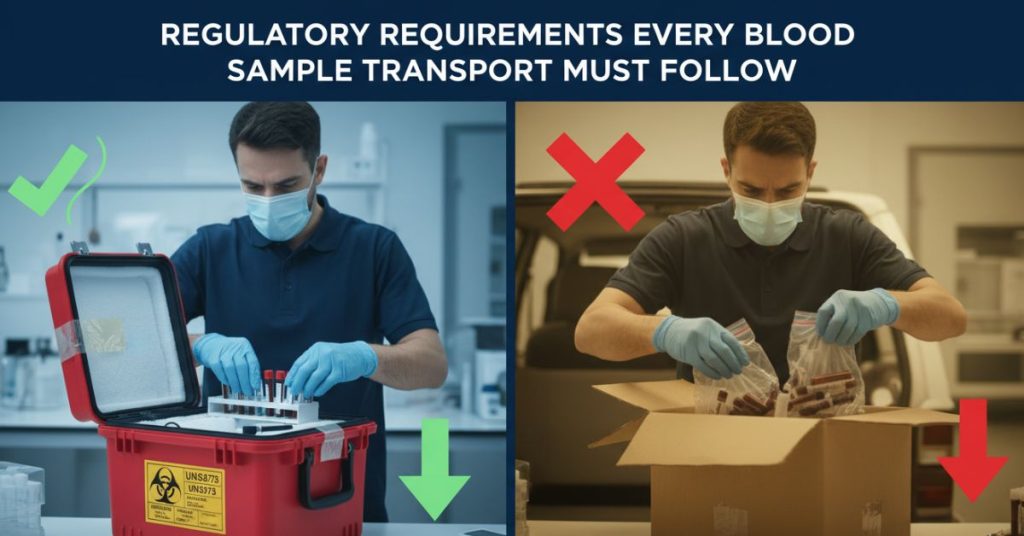
Packaging regulations are designed to prevent leaks, exposure, and damage. Most regulations require a triple packaging system consisting of a primary container, secondary packaging, and a rigid outer container.
Primary containers must be leak-proof and securely sealed. Secondary packaging must include absorbent materials capable of containing spills. The outer container provides physical protection during transit.
Proper packaging reduces the risk of contamination and protects couriers and laboratory staff. It is a non-negotiable requirement in regulated blood sample transport operations.
Labeling and Marking Rules Required by Transport Authorities
Blood sample labelling is more than just sticking a tag on a package. It helps everyone along the way to quickly understand what they are handling and how it should be treated. From alerting staff about potential hazards to showing the right way to carry or store the package, clear labels guide people at every step and reduce the chances of mistakes when things get busy.
Required markings usually cover details like biohazard symbols, the type of specimen inside, sender and receiver information, and simple direction cues such as which side should stay upright. When a shipment needs temperature control, extra markings help handlers stay on track. Clear labelling keeps things moving smoothly through checkpoints and labs and supports strong compliance across blood sample logistics without slowing anyone down.
Temperature Control Regulations to Preserve Sample Integrity
Temperature stability is essential for preserving blood sample quality. Different tests require specific temperature ranges, such as refrigerated, frozen, or controlled ambient conditions.
Cold packs, gel packs, and insulated containers are commonly used to maintain stability. Some regulations require validated temperature-controlled containers with monitoring devices.
Regulators expect documentation proving that temperature conditions were maintained throughout the transportation of blood samples. Without proper controls, samples may be rejected upon arrival.
Handling and Storage Rules During Blood Sample Transit

Handling and storage rules are meant to keep blood samples safe while they are being moved. Couriers should handle each package carefully and avoid actions like shaking, dropping, or placing heavy items on top of it. Gentle handling helps protect the sample and reduces the risk of damage during transit.
Samples must be kept upright and stored away from anything that could cause contamination. Regulations also require transport vehicles to be clean and prepared to manage spills if they occur. Following these simple rules helps ensure samples arrive at the laboratory in good condition and ready for accurate testing.
Documentation and Chain of Custody Requirements
Keeping good documentation is essential for following a blood sample from the moment it’s collected until it arrives at the lab. Transport records show who handled the sample, when it was moved, and where it was delivered. Having this clear trail helps healthcare teams feel confident that the sample was treated carefully every step of the way.
Transport logs, delivery records, and laboratory requisition forms are examples of the paperwork. An additional degree of security is provided by chain of custody documents, which attest to the blood sample’s safety and integrity throughout its transportation. In legal proceedings, forensic investigations, or clinical trials, where even a minor error can have dire repercussions, this degree of caution is particularly crucial.
Training and Certification Requirements for Transport Personnel
Regulations require personnel handling blood samples to receive proper training so they clearly understand what they are dealing with and how to handle it safely. This training enables employees to understand the fundamentals of biosafety, adhere to proper packaging practices, and respond calmly and correctly if something goes wrong during transport.
IATA certification is often required for staff involved in air transport, especially when samples are sent over long distances. Ongoing refresher training helps teams keep up with changing rules and best practices. Professional blood sample courier services focus on regular training to cut down on errors and keep all transport operations running smoothly and in line with regulations.
Emergency Procedures Required by Regulations
Even with all the right precautions, accidents can still happen during blood sample transport. Spills, leaks, or other incidents may occur, so regulations require having clear procedures in place to handle them safely.
These procedures usually involve containing the spill quickly, cleaning and decontaminating the area properly, and using the correct protective gear to keep everyone safe. If anyone is exposed, a medical evaluation must be carried out immediately to prevent further risks.
Reporting the incident to the relevant authorities is often mandatory. Being prepared not only helps reduce potential harm but also shows that your team is following the rules and ready for inspections or audits at any time.
Legal and Financial Consequences of Non-Compliance
Not following the rules for blood sample transport can cause serious problems. Organizations might face fines, have shipments turned away, or even risk losing their license. In extreme cases, legal action could follow.
But the impact goes beyond money or penalties. Mistakes can hurt a company’s reputation, and patients or healthcare partners may lose trust if errors happen. Staying compliant isn’t just about following regulations. It’s about making sure healthcare runs safely and responsibly every day.
Common Regulatory Violations and How to Avoid Them
- Using the wrong packaging for blood samples can lead to leaks or damage.
- Forgetting or misplacing labels can cause confusion and mishandling.
- Misclassifying samples may result in regulatory issues even if the sample is harmless.
- Leaving documentation incomplete makes it hard to track and verify samples.
- Regular audits and clear standard operating procedures help catch issues before they become serious.
- Keeping staff trained and using simple checklists reduces mistakes.
- Partnering with a reliable medical logistics courier that focuses on compliance can greatly lower the risk of violations.
How Staying Updated on Regulations Ensures Long-Term Compliance?
Regulations around blood sample transport change as medical science and best practices evolve. Keeping up with these updates helps organizations adjust smoothly without causing delays or problems.
Teams are kept in compliance with current standards through internal compliance programs, frequent staff training, and routine process reviews. Digital logs and tracking systems are examples of technology that facilitate adherence to regulations. By paying regular attention to these updates, blood sample logistics are maintained, and samples are guaranteed to arrive at their destination without incident.
Conclusion
Transporting blood samples safely is a critical part of healthcare, as it directly affects the reliability of test results and the well-being of patients. Every step from sorting and packing to keeping the right temperature and keeping records has a clear reason and impact.
Healthcare teams and couriers can ensure sample security and process confidence by adhering to best practices. Blood sample transport can run smoothly, safely, and effectively every day by adhering to regulations, properly training personnel, and paying close attention to every little detail.
If managing regulatory requirements for blood sample transport feels complex or time-consuming, having the right courier partner can make all the difference. WAY M.C.T LLC supports healthcare providers with compliant, reliable transport services, handling every sample with care and delivering with the accuracy and accountability you can trust.